A software studio for the AI era

We invent AI that makes life simpler, safer, and more connected.

Invent AI Labs is a dedicated team of software engineers building practical products that put artificial intelligence to work for real people — starting with Meal Master, and never stopping there.

Apps shipping
Meal Master
Built by
Engineers
Designed for
Everyone
Machine learningNatural languageComputer visionGenerative AIAgentic systemsPrivacy-firstHuman-centeredResponsible AIEdge intelligenceAutomationMachine learningNatural languageComputer visionGenerative AIAgentic systemsPrivacy-firstHuman-centeredResponsible AIEdge intelligenceAutomation
Our mission

Make the world better by unlocking what AI can do.

Our mission is to make the world a better place — simplifying people's lives, connecting them together, and keeping them safe with the power of AI. We keep inventing new solutions by unlocking the potential that artificial intelligence has to offer.

We're a dedicated team of software engineers who care as much about craft and responsibility as we do about shipping. Every product we build has to earn its place in someone's day.

Simplify life

We turn fiddly, time-eating tasks into a few calm taps. AI handles the boring parts so people get their time and attention back.

Connect people

Software is better when it brings households, teams, and communities together. We design for sharing, not isolation.

Keep people safe

Privacy, security, and trust are built in from the first line of code — not bolted on later. Safe by default.

The shift underway

AI is becoming the infrastructure of everyday life.

In a handful of years, AI has moved from research labs into pockets, kitchens, clinics, and classrooms. The opportunity is enormous — and so is the responsibility to get it right.

$0.0T

AI’s projected boost to the global economy by 2030

PwC estimate

$0.0T

Potential annual value from generative AI

McKinsey estimate

0%

of organisations report using AI in at least one function

Stanford AI Index 2025

0%

of work activities could be augmented or automated over time

McKinsey research

What we build

Products people actually use every day.

We don't build AI demos. We ship finished products with real users. Meal Master is the first — a calm, AI-powered companion for everything around food.

Meal Master logo

Meal Master

Live · iOS / Android / Web

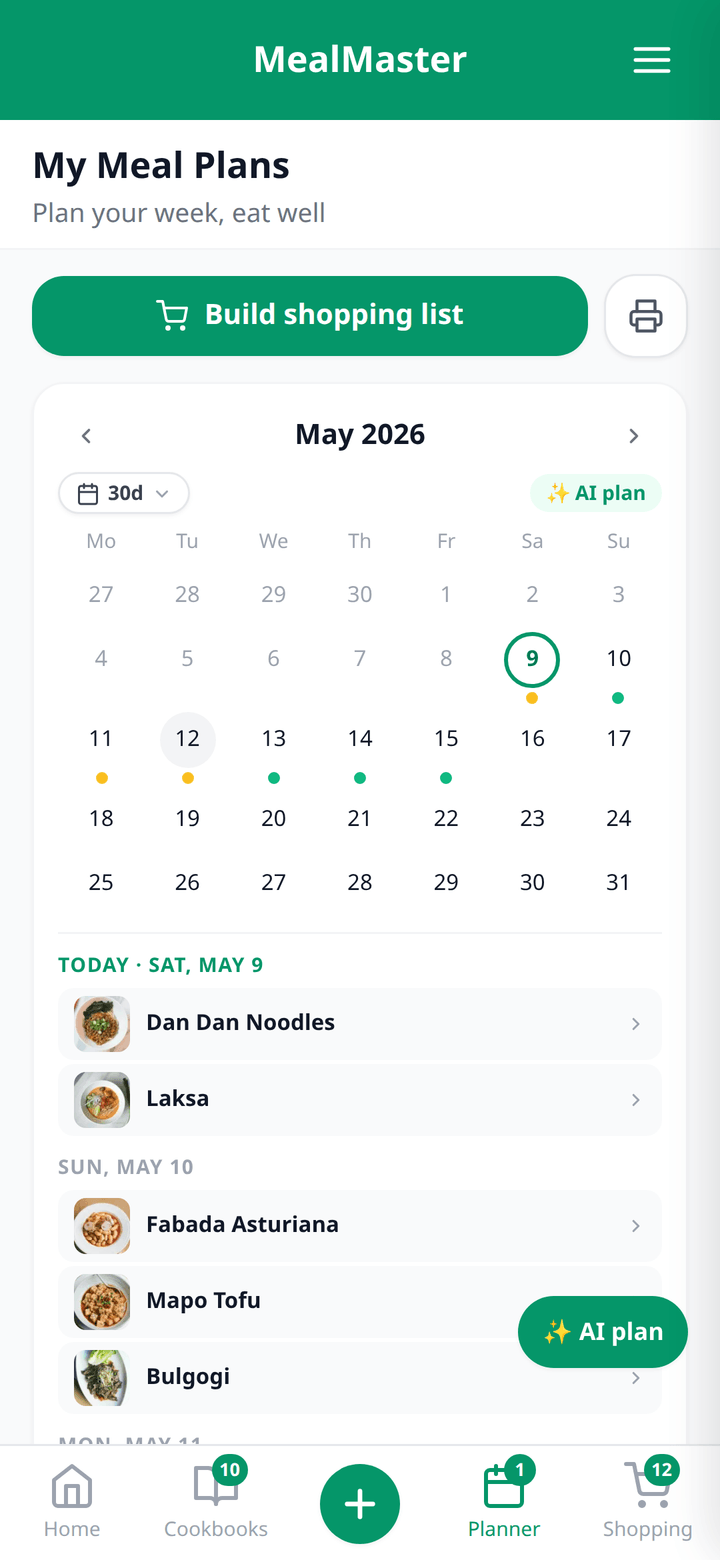
Plan meals, organise recipes, and skip the grocery-list chaos. AI does the boring parts — extracting recipes from a link or a video, scaling ingredients, and building your shopping list automatically.

  • Pull recipes from any website, video, or photo with AI
  • Plan a week of meals on a calendar
  • Auto-generated, aisle-sorted shopping lists
  • Share cookbooks and plans with your household
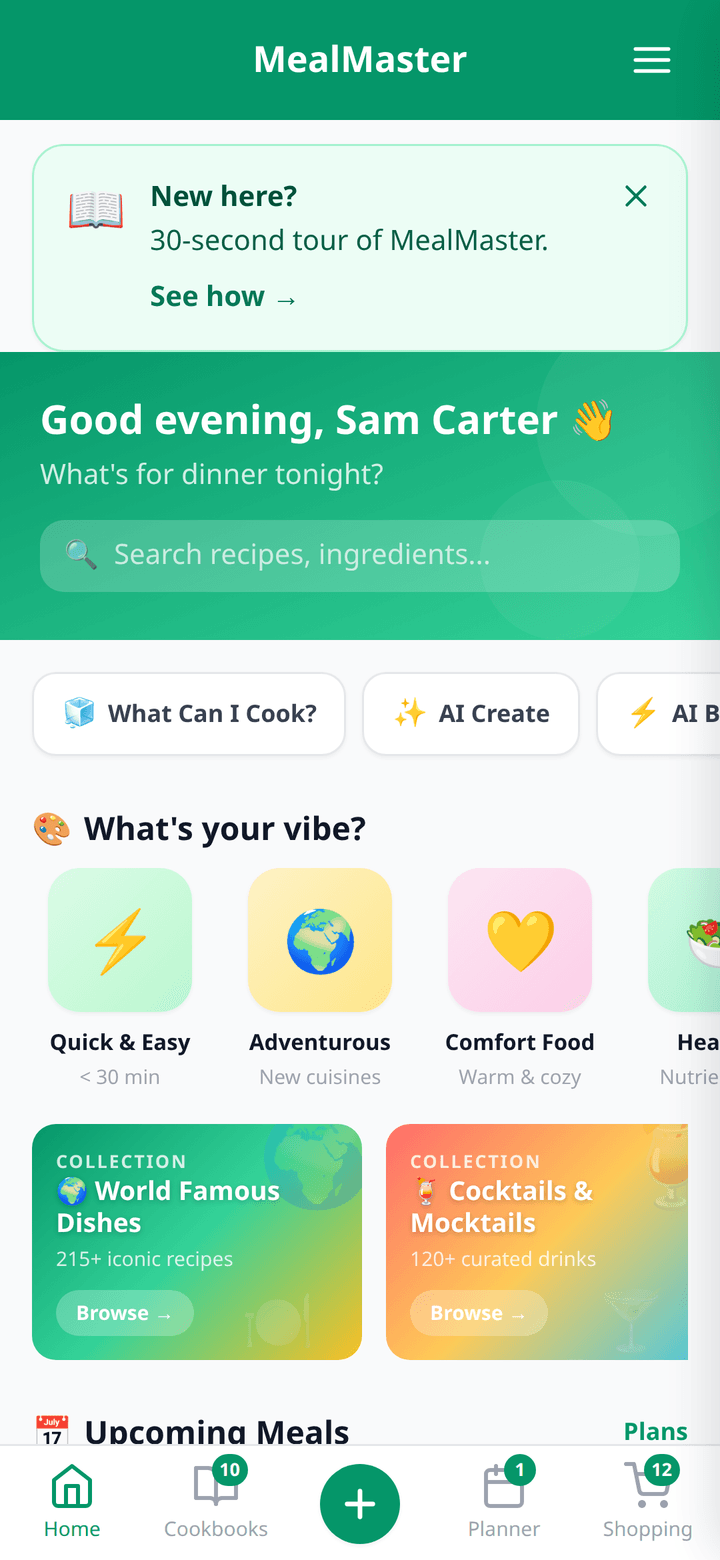
Meal Master home screen
In the lab

More apps on the way

We're exploring AI products in health, productivity, and safety — each with the same promise: simpler, more connected, and safe by default.

Have an idea, or want to partner with us?

Let's talk
How AI is shaping the world

A technology that can lift quality of life — if we steer it well.

Like electricity or the internet before it, AI is a general-purpose technology: it touches almost everything. Used thoughtfully, it can make essential services better, cheaper, and more available. Used carelessly, it can amplify our worst habits just as fast.

Where it improves life

Healthcare

AI is accelerating drug discovery, reading medical scans faster, and bringing diagnostic help to places without specialists — extending quality care to more people.

Education

Adaptive tutors meet learners where they are, translate instantly, and give every student a patient, always-available guide tailored to how they learn.

Everyday productivity

Drafting, summarising, planning, and searching now take seconds. The friction of routine knowledge work is collapsing, freeing time for what matters.

Accessibility

Real-time captioning, image-to-speech descriptions, and voice interfaces are removing barriers for people with disabilities — software that adapts to the person.

What to watch for

Progress this fast carries real risks. We name them plainly because the only way to build trustworthy AI is to design against its failure modes from the start:

  • Misinformation and synthetic media (deepfakes) at scale
  • Bias and unfair outcomes baked into training data
  • Privacy erosion and over-collection of personal data
  • Over-reliance and automation bias — trusting AI without checking
  • Concentration of capability in a few hands
  • Job disruption that outpaces reskilling
Predictions & opportunities

Where this is going — and where the white space is.

We watch the frontier closely so our products skate to where the puck is going. Here's how we read the next few years, the openings for businesses, and the gaps still waiting to be filled.

2025–2027
01

Agents go to work

AI shifts from answering questions to completing multi-step tasks — booking, reconciling, monitoring — under human oversight. The "assistant" becomes a "coworker".

2026–2028
02

AI on the edge

Capable models run on phones and laptops, offline and private. Latency and data-privacy concerns fall away for a whole class of everyday use cases.

2027–2030
03

Vertical AI everywhere

The winners are domain-specific products — AI that deeply understands cooking, care, law, or logistics — not generic chatbots. Depth beats breadth.

How businesses can take advantage

Boring problems, big value

The richest opportunities are unglamorous: scheduling, paperwork, compliance, data entry. Automate a painful workflow and customers pay gladly.

Small businesses, finally served

Enterprise had AI budgets first. The open space is bringing the same leverage to solo founders, tradespeople, and small teams at consumer prices.

Trust as a product

As AI floods the market, provenance, safety, and privacy become differentiators people will pay for — not checkboxes.

Gap studies — what's still missing

The "last-mile" gap

Models are powerful, but few products turn raw capability into something a non-technical person can trust in their daily routine. The gap is product, not model.

The verification gap

AI output is cheap; checking it is expensive. Tools that make AI results easy to verify and correct are badly under-built.

The local-language gap

Most AI quality is concentrated in a few major languages. Billions are under-served — a large, open market for inclusive products.

Open-source case studies

The best technology is built in the open.

We believe in standing on — and contributing back to — open foundations. These projects shaped modern computing and AI, and they shape how we build.

Linux

Open foundations win

Started by one developer in 1991, now the open kernel behind most of the world’s servers, Android phones, and cloud infrastructure. Proof that open, community-built software can become critical infrastructure.

Open beats closed at scale and over time.

PyTorch

Research → production

Open-sourced by Meta and now under the Linux Foundation, PyTorch became the default framework for AI research and is donated to a neutral foundation — so no single company controls the tools the whole field depends on.

Shared tooling accelerates an entire industry.

Hugging Face Transformers

Lowering the barrier

An open library and model hub that made state-of-the-art models a few lines of code to use. It turned cutting-edge AI from a privilege of large labs into something any developer can build on.

Accessibility compounds innovation.

Kubernetes

Open standards

Google open-sourced its container orchestration system and handed it to the Cloud Native Computing Foundation. It became the neutral industry standard for running software at scale — adopted by competitors alike.

Donating a standard grows the whole market.

Llama & open weights

Democratising models

Openly available model weights from Meta and others let startups, researchers, and hobbyists fine-tune capable AI on their own data and hardware — fuelling a wave of products that closed models alone could not.

Open weights unlock a long tail of innovation.

Signal

Privacy in the open

A fully open-source, end-to-end encrypted messenger whose protocol is independently audited and reused across the industry. Trust earned by being inspectable, not by asking users to take it on faith.

Transparency is how you earn trust.

Responsible AI

Powerful technology needs guardrails and good law.

We don't see regulation as the enemy of innovation — sensible rules build the public trust that lets good products thrive. The legal landscape is changing fast, and businesses that take it seriously now will be the ones still standing later.

The changing legal landscape

EU AI Act

European Union

The world’s first comprehensive AI law. Takes a risk-based approach — banning some uses outright, tightly regulating "high-risk" systems, and phasing in obligations through 2026. A likely template for other regions.

GDPR & data protection

EU + global influence

AI runs on data, and data-protection law governs how personal information is collected, used, and explained. Consent, purpose limits, and the right to an explanation all apply to AI systems.

AI Ethics Framework

Australia

Australia’s voluntary principles — fairness, transparency, accountability, privacy, and contestability — guide responsible AI, with mandatory guardrails for high-risk settings under active consultation.

NIST AI RMF

United States

A widely adopted, voluntary risk-management framework for building trustworthy AI — govern, map, measure, and manage risk across an AI system’s lifecycle.

This is a general overview of a fast-moving area, not legal advice. Specifics change — consult qualified counsel for your jurisdiction and use case.

What to be cautious of

!

Bias & fairness

Test for disparate outcomes across groups; bad data produces unfair systems.

!

Privacy by design

Collect the minimum, secure it well, and be explicit about what AI does with it.

!

Security

Guard against prompt injection, data leakage, and model misuse as first-class threats.

!

Transparency

Tell people when they’re interacting with AI, and where outputs come from.

!

Human oversight

Keep a person in the loop for consequential decisions — AI advises, humans decide.

!

Accountability

Someone must own each system’s behaviour. No "the algorithm did it".

Who we are

A dedicated team of software engineers.

Invent AI Labs is small, focused, and hands-on. We're engineers first — the people designing, building, and maintaining every product carry the pager too. That keeps us honest about quality and accountable for what we ship.

We bring together backgrounds in machine learning, full-stack product engineering, design, and security — pointed at one goal: AI that genuinely improves everyday life.

Engineering-led

Built by software engineers who ship — not slideware.

Craft

We sweat the details others skip. Quality is the feature.

Responsibility

Privacy, safety, and fairness are requirements, not afterthoughts.

Relentless

We keep inventing. One product live, more on the way.

Get in touch

Let's invent something that makes life better.

Whether you want to partner, invest, join the team, or just say hello — we'd love to hear from you.